One method uses raw force. The other uses chemistry. Here's how we decide which one belongs on your property, and why picking the wrong one can cost you thousands.
Almost every exterior cleaning question we get comes down to the same misunderstanding: people think all outdoor cleaning is 'pressure washing.' It isn't. There are two completely different methods, and using the wrong one on the wrong surface is one of the fastest ways to damage a home.
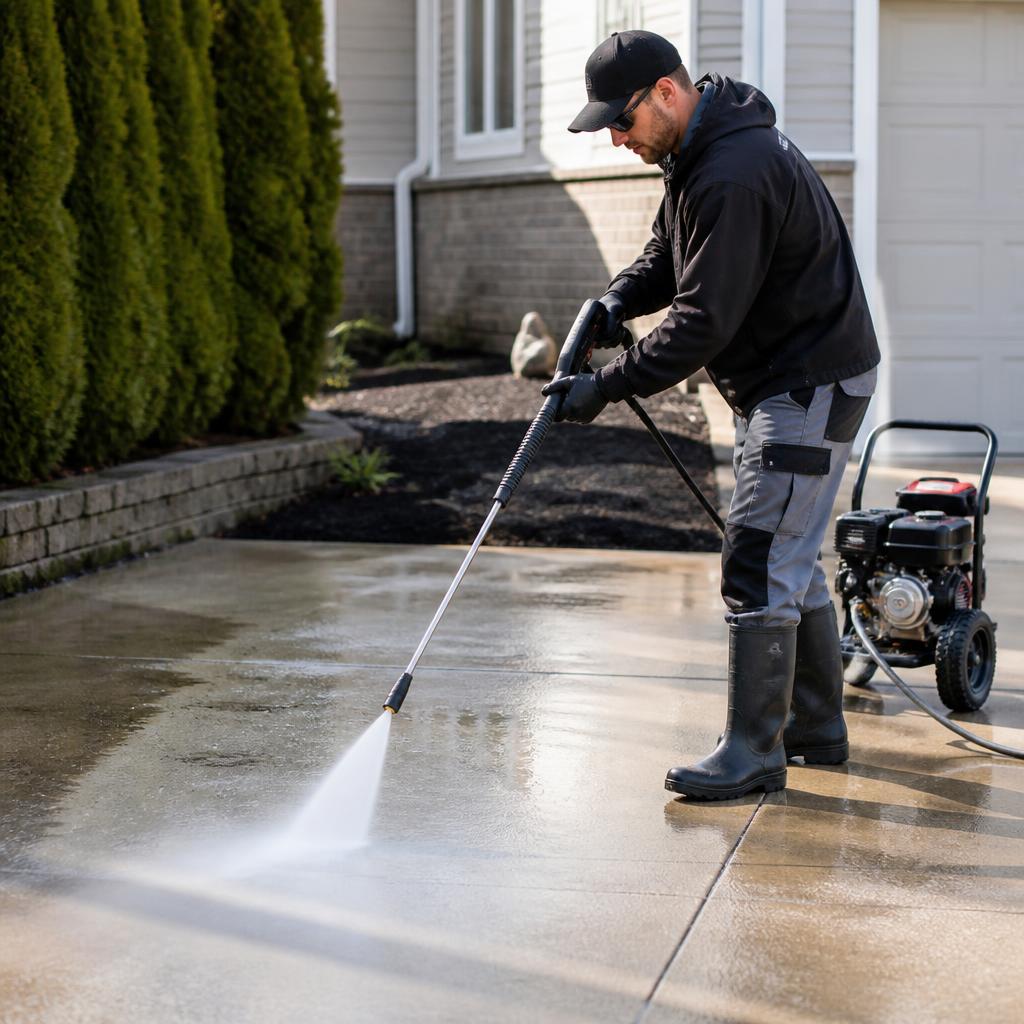
Pressure washing uses pressurized water, often anywhere from 1,500 to 4,000 PSI depending on the machine and surface, to break loose dirt, grime, tire marks, and stains from hard materials. It's the right tool for durable surfaces like concrete driveways, sidewalks, patios, pavers, brick, and some natural stone. In professional hands, that pressure is controlled and matched to the surface. Used carelessly, it can etch concrete, chip mortar, or leave permanent wand marks.
Soft washing is the opposite approach. It runs at a fraction of the pressure, usually under 500 PSI, closer to a garden hose, and does the actual cleaning with a professional-grade solution based on sodium hypochlorite and a surfactant. The chemistry kills mildew, algae, bacteria, moss, and lichen at the root, then a low-pressure rinse carries everything off. Because there's no force involved, it's safe on the parts of a home that pressure would damage: vinyl and painted siding, stucco, cedar, screens, soffits, and asphalt shingle roofs.
Here's why the distinction matters. When someone points a pressure washer at their siding or roof, the immediate result looks fine, the surface is wet, the mildew streaks are gone for the moment. The damage shows up later: water forced up behind vinyl panels causes mold inside the wall cavity, blown-out caulking around windows lets water intrude, torn window screens need replacing, and asphalt shingles lose the mineral granules that protect them from UV. The ARMA (Asphalt Roofing Manufacturers Association) is explicit that high-pressure washing voids most shingle warranties. What looked like a quick clean turns into a real repair bill, and the mildew comes back within months because pressure didn't kill it, it just knocked it off the surface.
The rule to follow on any property is simple: if a surface is hard, flat, and built to take abuse, controlled pressure is on the table. If it's part of the actual structure of the house, siding, roof, soffits, painted wood, screens, it should be soft washed. Every time. No exceptions. That's why a reputable company will always walk the property and match the method to the surface before anything gets turned on.
A quick reference for what belongs with which method. Pressure washing: concrete and paver driveways, sidewalks, patios, brick walkways, retaining walls, and dumpster pads. Soft washing: vinyl, aluminum, and painted siding, stucco, cedar, roofs, screens, fascia and soffits, and painted decks. Windows are their own category, they're hand-cleaned with a squeegee, scrubber, and a professional glass solution, never pressure washed or soft washed. Anything sealed, stained, or delicate, hardwood decks, composite decking, older painted surfaces, is a case-by-case call based on condition.
The short version: pressure cleans dirt off hard surfaces. Soft washing kills the biology growing on softer ones. Match the method to the surface and you get a clean that lasts. Mix them up and you can shorten the life of the very thing you were trying to protect.